Nesting Elements
Faux plants that don’t look fake (and where real ones win)
Pick the right species, fix the pot, and know when a living plant is the better buy. Indoors, porches and balconies.
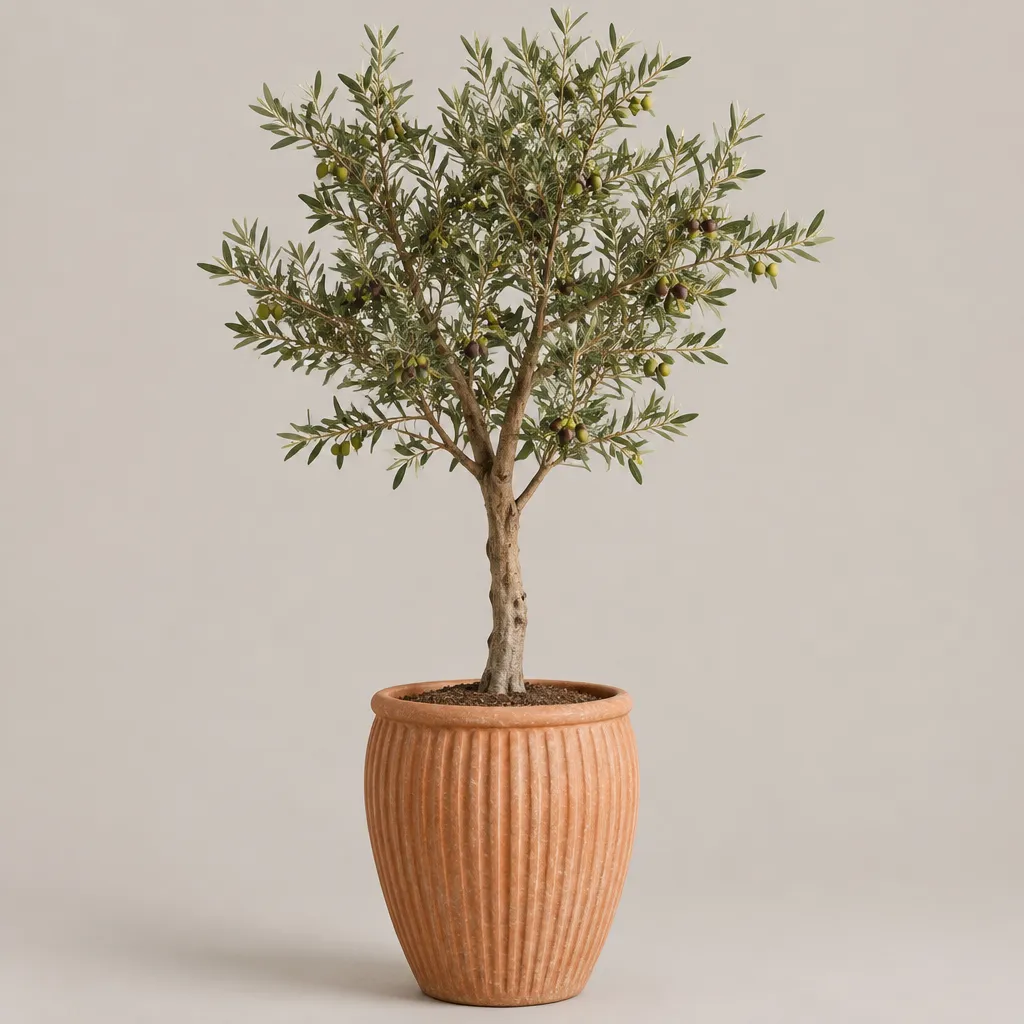
AI concept render.
The short version
Choose species with simple, matte leaves like olive and fig. Repot into a real planter with real soil or moss on top. Outdoors, buy UV-rated only.
Faux plants have improved a lot. The good ones can fool you from across a room. The bad ones are shiny, too perfect and sitting in a plastic pot. The difference comes down to three things you can control.
Choose a species that fakes well
Plants with matte, slightly irregular leaves look the most convincing: olive trees, fiddle leaf figs, eucalyptus and many grasses. Glossy tropical leaves and flowering plants are harder to pull off, because real versions change constantly and fake ones don't.
Fix the pot
This is the single biggest upgrade. Lift the plant out of its plastic base and set it in a real planter (terracotta, stone, ceramic, or a ribbed pot). Top it with real soil, bark or moss so the base looks alive. Then bend a few branches so it isn't perfectly symmetrical.
Keep them dusted
A dusty faux plant gives itself away fast. Wipe the leaves every few weeks with a damp cloth.
Taking it outside
For porches and balconies, buy faux plants that are rated for UV resistance. Indoor-only plants fade in direct sun, sometimes in a single season. Weigh down tall pots so wind doesn't tip them.
When real wins
If you have bright light and will remember to water every week or two, a real plant is better. It changes with the seasons, it smells like something, and it's often cheaper. Faux makes sense for dark corners, high shelves, rentals you travel away from, and spots you just can't reach with a watering can. Many rooms look best with both: real plants by the window, a faux tree in the corner that never sees sun.