Nesting Elements
Travertine without a renovation
The stone everyone wants, in pieces you can carry home. Plus what it really takes to care for it.
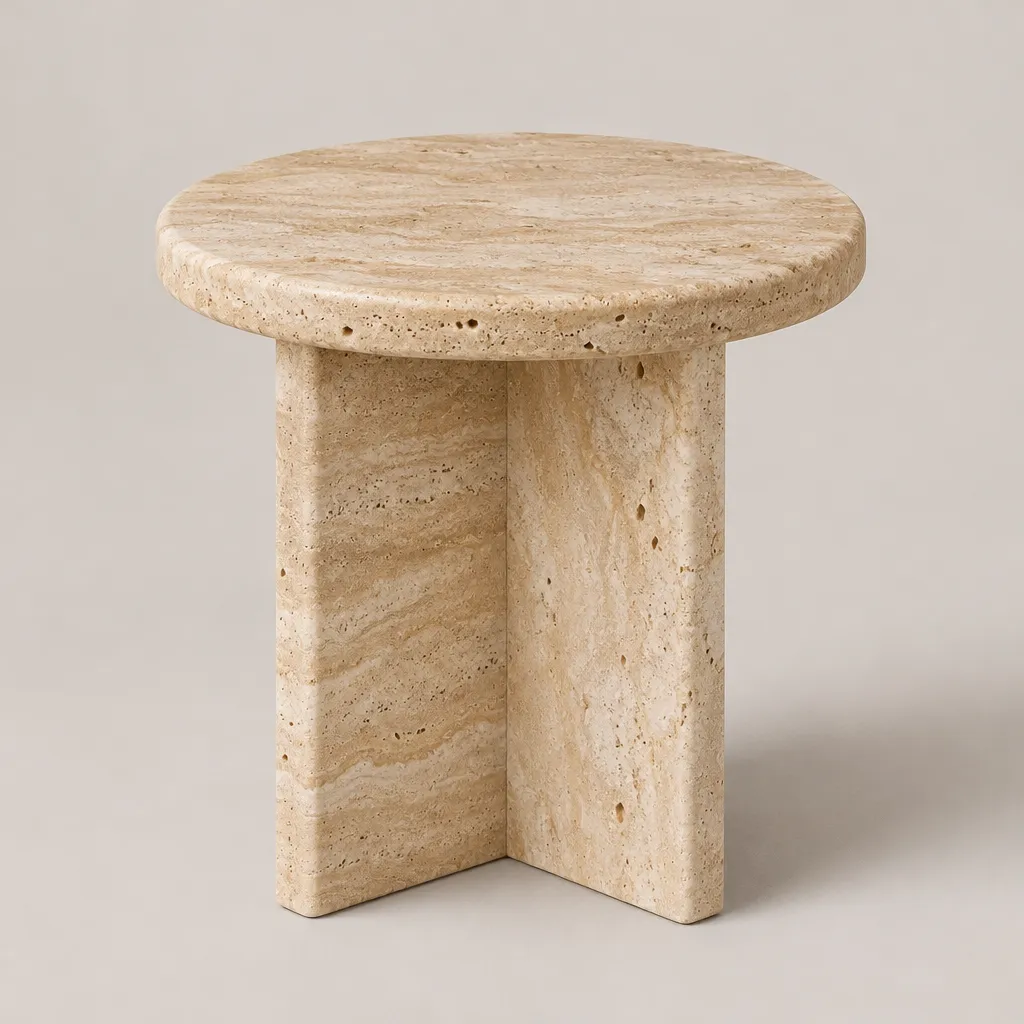
AI concept render.
The short version
Start with one travertine piece you can move. Choose honed and filled for everyday use. Use coasters, because acid etches it.
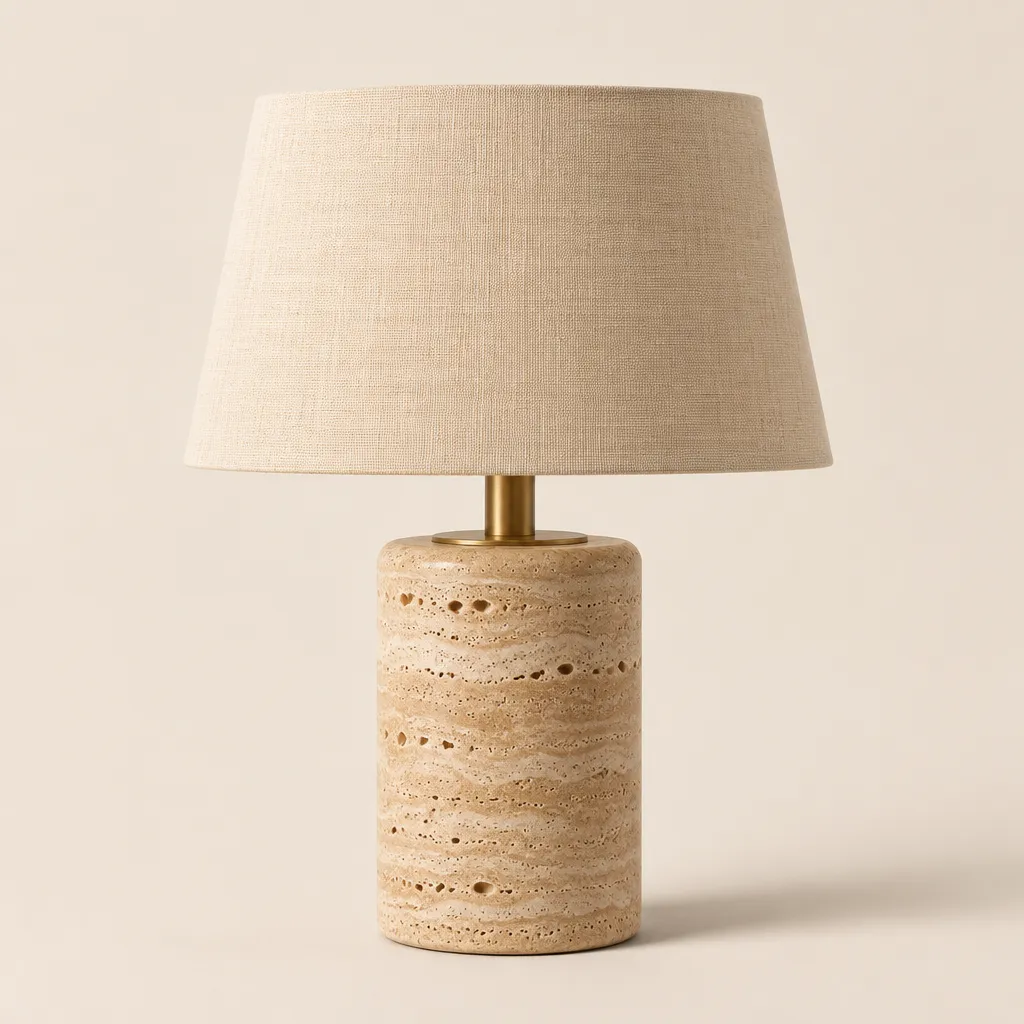
Travertine has gone from bathroom floors to almost every surface in a living room. You don't need to retile anything to get the look. A side table, a lamp base or a tray gets you the soft, chalky texture for a fraction of a renovation.
What it is
Travertine is a type of limestone formed around mineral springs. The gas bubbles in that process leave its signature pits and channels. It's warm in tone, usually cream, beige or a light walnut, and it's softer than granite or quartz.
The four words on the listing
- Filled. The holes are filled with resin or cement. Smoother and easier to wipe clean. The best choice for a table you'll actually use.
- Unfilled. Holes left open. More texture, but crumbs and dust collect in them.
- Honed. A matte, smooth finish. This is the look most people mean when they say travertine right now.
- Polished. Glossy. More formal, and it shows etch marks more clearly.
Caring for it
Travertine is calcium carbonate, which means acids react with it. Lemon juice, vinegar, wine and many bathroom cleaners can leave dull marks called etching. Use coasters, wipe spills quickly, clean with a pH-neutral stone cleaner, and reseal once or twice a year if the piece is used every day.
Spotting a fake
Real stone is cold to the touch and heavy for its size. Look at the pattern: in real travertine, no two pits repeat. If the same mark shows up twice on a tabletop, it's a print. Resin and ceramic lookalikes aren't bad buys, especially outdoors or around kids. Just make sure the price reflects what they are.
Where to put it
One stone piece per room is plenty. Next to a velvet chair or linen sofa, the contrast between soft fabric and stone is what makes the look work.