Nesting Elements
Curves are staying: why rounded furniture outlasted the trend
Rounded sofas and bouclé chairs were supposed to be a phase. Here’s why they stuck, and how to buy one that ages well.
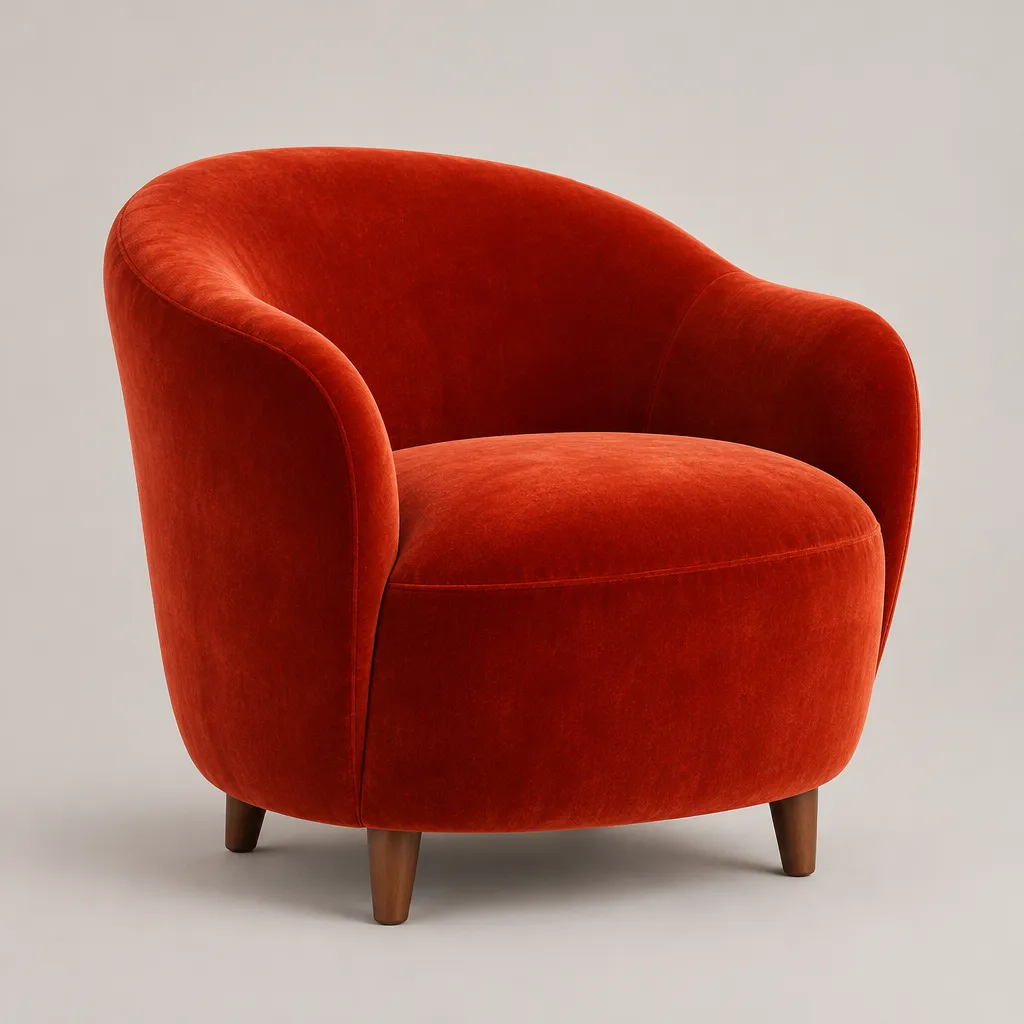
AI concept render.
The short version
One curved piece softens a room of straight lines. Check the seat depth and the fabric rub count before you buy. Velvet and tight weaves wear better than loose bouclé.
A few years ago, rounded sofas and curvy accent chairs looked like a trend with a short shelf life. They've stuck around because they solve real problems. A curve softens a room full of hard lines (windows, shelves, TVs) and makes it easier to walk around furniture in a tight space.
Where a curve does the most work
- Small rooms. No corners to bump into, and a rounded chair takes up less visual space than a boxy one.
- Rooms with a lot of straight lines. A curved chair next to a square bookcase is an easy contrast.
- Conversation areas. Curved sofas face people toward each other without trying.
What to check before you buy
Seat depth. Curved chairs often have shallow seats that look great and sit poorly. Look for at least 20 inches of usable depth if you want to curl up.
Fabric durability. Look for a rub count (sometimes listed as double rubs or Martindale). For a chair that gets daily use, higher is better. Velvet and tightly woven fabrics usually wear better than loose, loopy bouclé, which can snag on pets and jewelry.
Back height. Low, rounded backs look sculptural but don't support your head. Decide whether this is a reading chair or a looking-at chair.
Don't overdo it
One or two curved pieces is plenty. A room where everything is round starts to feel like a waiting area. Pair a curved chair with a straight-edged side table and let the contrast do the work.